
Redondo Beach · Masonry Services
Pavers
Paver driveways, patios, walkways and pool decks across the South Bay. Concrete, brick and cobblestone pavers laid on a compacted base with edge restraint.
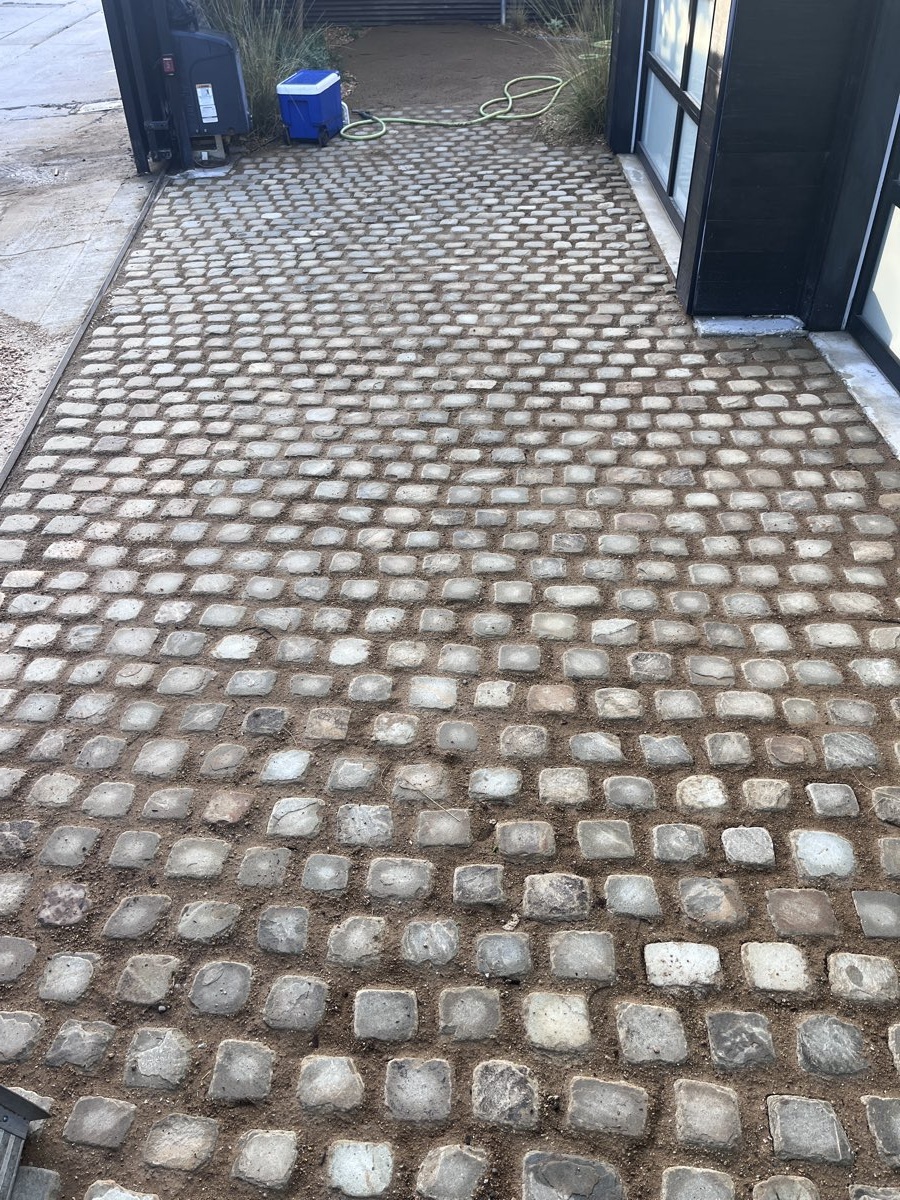
Pavers · Redondo Beach
Paver Surfaces That Stay Flat
Pavers are the most forgiving hard surface you can put down, because they move a little instead of cracking and any single unit can be lifted and replaced. That only holds if the base is right. Redondo Beach Masonry installs pavers throughout Redondo Beach and the surrounding beach cities: paver driveways, patios, walkways, pool decks, courtyards and driveway aprons, in concrete pavers, clay brick pavers, block pavers and natural cobblestone. Every installation goes over an excavated and compacted aggregate base with bedding sand, edge restraint on every open side, and joints filled with polymeric sand. That base is most of the job, and it is the reason our installations are still flat years later.
Why Go With Us for Paver Installation
Paver work is judged entirely on what happens two years later. Sunken patches, spreading edges and weeds through the joints all trace back to the same three things: base depth, compaction and edge restraint. We excavate to the depth the use requires, which is deeper for a driveway than a patio, compact in lifts rather than all at once, and restrain every open edge so the field cannot creep. We plan the pattern so cuts land where they are least visible and the joint lines run true to the house. Pavers also sit well alongside the rest of what we build, whether that is a retaining wall edging the patio or a cobblestone border framing the drive. Paver projects often need a low wall to hold an edge, or a cobblestone band to break up a large field. Comparing the surfaces on our main page is the quickest way to decide between pavers, stone and poured concrete.
- Driveways, patios, walkways and pool decks
- Concrete, clay brick and block pavers
- Granite and reclaimed cobblestone
- Compacted base built to the actual use
- Edge restraint and polymeric sand joints
- Repairs, releveling and re-sanding
Reasons to Choose Pavers
Pavers get chosen over poured concrete for reasons that show up over time.
You want a surface you can repair
A cracked concrete slab is a replacement job. A damaged paver is a twenty minute fix. Lift the affected units, correct the base beneath them, and set them back. Over the life of a driveway that difference adds up considerably.
Drainage matters on the property
Joints between pavers let water through instead of sheeting it toward the house or the street. On lots where runoff is already a problem, and on anything near a slope, that permeability is worth having.
The look needs to be specific
Pattern, color, size and border detail are all decisions with pavers. Herringbone for a driveway, running bond for a walkway, a soldier course border, a contrasting band. Poured concrete cannot offer that range without stamping.
It has to handle vehicles
Interlocking concrete pavers over a properly compacted base carry vehicle loads well and handle the point loads that crack thin slabs. Paver driveways and aprons are common here for exactly that reason.
You are working around a pool
Paver pool decks stay cooler than dark concrete, give better grip wet, and can be lifted if plumbing underneath ever needs attention. That last point alone is why pool contractors keep specifying them.
Call (310) 651-7257 for a free estimate on a paver installation. Call: (310) 651-7257
How We Work
Site walk, written scope, permit, build. One crew lead from the first visit through final cleanup.
1. Design, layout and material
We measure the area, agree the pattern, border and material, and check the fall so water goes where it should. You see samples before anything is ordered, because paver color reads differently in a yard than in a catalog.
2. Excavate, base and compact
We dig to the depth the use requires, lay and compact the aggregate base in lifts, then screed the bedding sand. This is the part nobody sees and the part that decides whether it stays flat.
3. Lay, cut, restrain and lock
Pavers go down to the layout, cuts are made on site with a saw rather than forced, edge restraint is fixed on every open side, then polymeric sand is swept in and the field is plate-compacted and locked.
Paver Work We Cover
Paver driveways
Interlocking concrete pavers on a deeper compacted base built for vehicle loads, with herringbone laid in the traffic area for maximum interlock and a soldier course border to hold the edge.
Paver patios
Level, drainable outdoor living space in whatever pattern and color suits the house. Straightforward to extend later, and easy to run conduit under before it goes down.
Walkways and paths
Front paths, side yard runs and garden paths, with the width and the pattern set to the space. A well-laid path handles a hose reel and a wheelie bin without rutting.
Pool decks and coping
Cooler underfoot than concrete, better grip when wet, and liftable if anything below needs access. We set coping and the transition to the deck so the edges stay clean.
Block pavers
Standard concrete block pavers in a wide range of colors, shapes and finishes. The value option and the most versatile, with tumbled finishes available where a weathered look is wanted.
Cobblestone
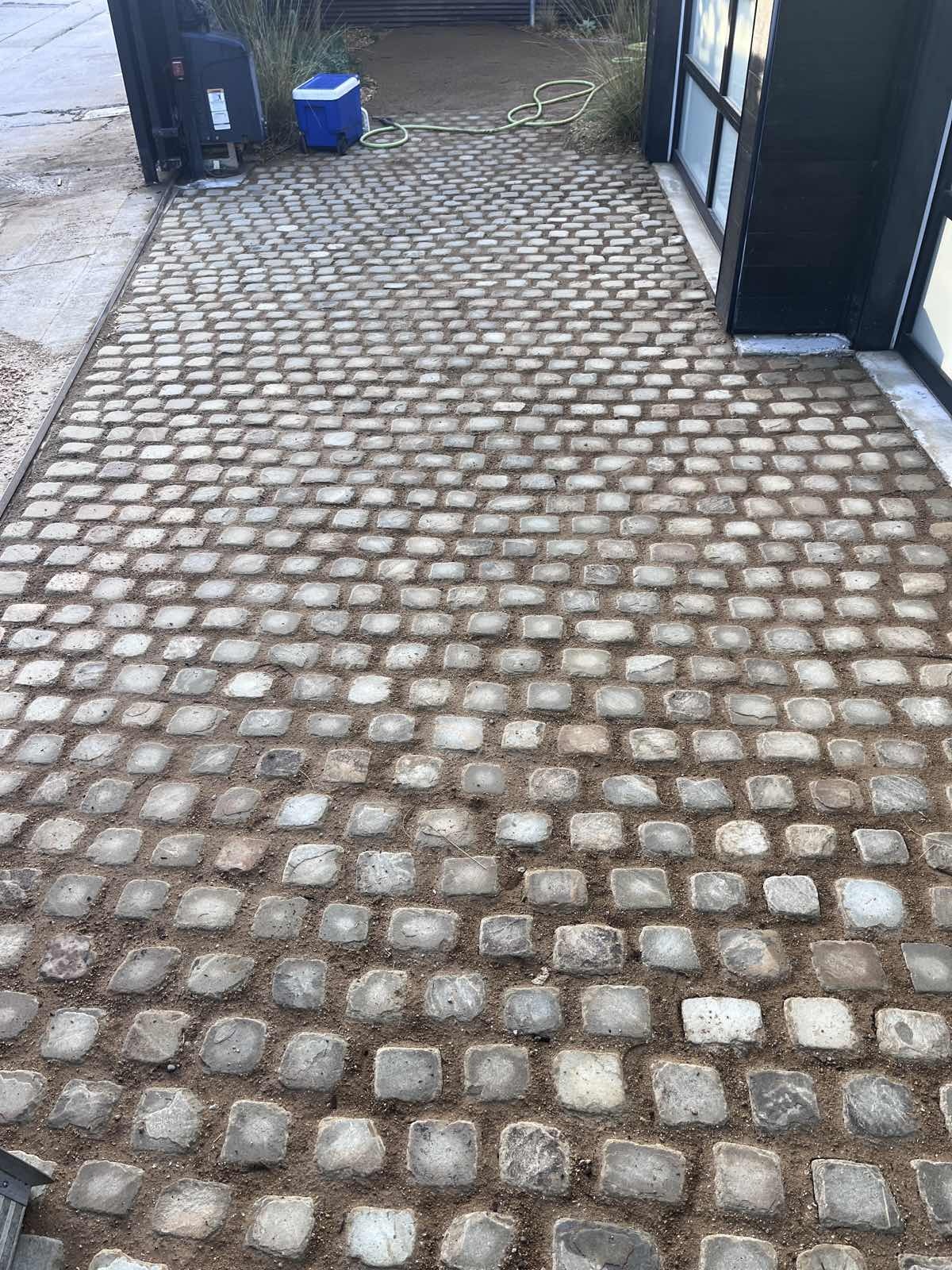
Granite and reclaimed cobbles laid as full surfaces, driveway aprons, borders and gutter runs. The most durable and the most characterful option, and it works well banded into a block paver field.
Repairs and releveling
Lifting sunken areas, correcting the base, replacing damaged units, resetting spread edges and re-sanding joints. Far cheaper than replacing a whole surface.
What Affects the Cost of Pavers
Paver installation is priced per square foot, with the base work often the largest single component. What moves it:
- Area and use. A driveway needs a deeper base and thicker units than a patio, so it costs more per square foot.
- Paver selection. Standard concrete block pavers are the value end. Clay brick, tumbled units and natural cobblestone cost more.
- Pattern. Running bond is quick. Herringbone, basketweave, borders and inlays mean more cuts and more labor.
- Excavation and disposal. Removing an existing slab, or digging out soft ground, adds days and haul-away costs.
- Drainage. Channel drains, catch basins and pipework tie-ins get priced separately where a site needs them.
- Edge and finish detail. Soldier courses, cut curves, step treads and sealing all add to the total.
You get a flat price covering excavation, base, laying and cleanup. Free estimates: (310) 651-7257.
Frequently Asked Questions
How long do pavers last?
The units themselves are good for 25 to 50 years, whether concrete or clay. What decides where you land in that range is the base: depth of aggregate, how well it was compacted, and whether the edges were properly restrained. Any single paver can be lifted and replaced years later, so localized damage never means redoing the whole surface.
Do pavers need to be sealed?
Sealing is a choice, not a requirement. Applied every two to three years it resists oil and tannin stains, slows UV fading and stiffens the joint sand against weeds. Skip it on a shaded side path. Consider it on a driveway, a pool surround or an outdoor dining area, where the things that stain pavers actually get spilled.
Are pavers better than concrete for a driveway?
For most driveways here, pavers are the better long-term surface. They sit on a flexible base, so soil movement and tree roots show up as a slightly raised joint rather than a crack running the length of the slab, and individual sections can be lifted and reset dead level again. The open joints also let rain soak in instead of sheeting toward the street. Concrete remains the cheaper option up front.
Will weeds grow between pavers?
Very little, if the joints are filled with polymeric sand and the surface is swept and topped up occasionally. Most weeds in a paver field germinate in debris that has collected in the joints rather than growing up from below, so keeping the surface clean does most of the work.
Can pavers be laid over an existing concrete slab?
Sometimes. If the slab is sound, drains properly, and the extra height works at doors and thresholds, an overlay is faster and cheaper than removal. If it is cracked, sinking or holding water, the slab comes out first.
Planning masonry work in Redondo Beach?
Tell us what you have in mind, a wall, a patio, a repair or a full backyard, and we will come out for a free on-site walk and a written price.
Or call us now: (310) 651-7257