
Redondo Beach · Masonry Services
Stone Masonry
Natural stone masonry for South Bay homes. Flagstone patios, stone walls, stone steps, boulder placement and cobblestone, in real cut and fieldstone.
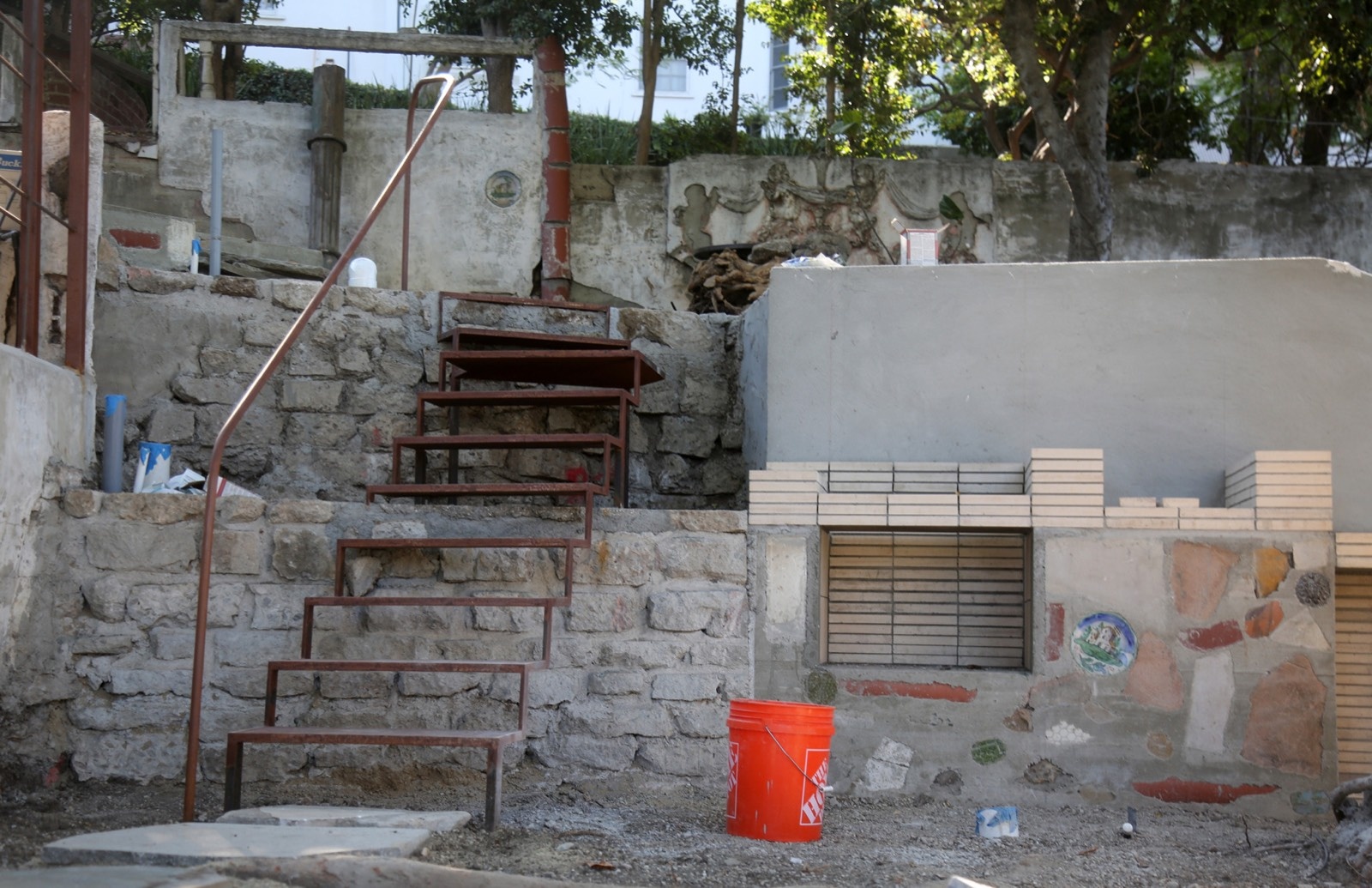
Stone Masonry · Redondo Beach
Real Stone, Set by Hand
Stone is the only building material that already looks finished before anyone touches it. The craft is in the selection and the fit: choosing which face goes out, which piece sits next to which, and how tight the joints run. Redondo Beach Masonry does natural stone masonry across Redondo Beach, Hermosa, Manhattan Beach and the Palos Verdes peninsula. We build stone walls in dry-stack and mortared form, lay flagstone patios and walkways, cut and set stone steps, place boulders as landscape features and grade retention, and install cobblestones for driveways, borders and aprons. We work in quarried and fieldstone from California and further afield, and we bring samples to the property so you see them in your own light before anything is ordered.
Why Go With Us for Stone
Stone work separates masons quickly. Anyone can mortar rocks to a wall. Making it read as though the stone grew there takes an eye for pattern, joints that stay consistent, and the patience to set a piece down and pick up a different one. Our stone masons dry-fit before they set, which is slower and is the reason the finished wall does not look like a jigsaw. We also get the structure right underneath, because a flagstone patio on an unprepared base will move in a season and a mortared stone wall without a proper footing will crack along the same line every winter. Stone is a permanent material and we build it to be treated as one, whether it is the face of a retaining wall or a set of steps down to a lawn. A lot of stone work goes in over a structural core, which is why it so often pairs with a block retaining wall or a concrete base underneath. A look at our brick and stone masonry work will show you how the pieces combine on a real property.
- Flagstone patios and walkways
- Dry-stack and mortared stone walls
- Cut stone steps and treads
- Boulder placement and slope features
- Granite and reclaimed cobblestones
- Natural stone veneer on walls and columns
Reasons to Choose Stone
Stone gets specified for reasons brick and concrete cannot cover.
You want the house to look established
Nothing ages a new build into its lot faster than real stone. A stone facade, a low front wall or a stone-faced entry column reads as though it has been there far longer than it has, which is exactly the effect most people are after.
The yard has grade to deal with
Stone steps and boulder placement solve elevation changes that would otherwise need a wall. Steps cut from solid stone are effectively permanent, and a well-placed boulder holds soil while looking like landscape rather than engineering.
You want a patio that is not concrete
Flagstone patios give you natural color variation, a surface that stays cooler underfoot than poured slab, and joints you can plant. They suit coastal properties well because irregular stone hides sand and wear that a smooth surface shows.
A driveway or border needs texture
Cobblestones set as a driveway apron, a border band around a paver driveway, or a gutter run alongside a path add detail that flat surfaces cannot. They are also close to indestructible under vehicle loads.
You are matching existing stonework
Palos Verdes stone appears on a great many older homes on the peninsula, and matching it takes knowing the quarry and the coursing. We repair, extend and rebuild existing stone rather than defaulting to a full replacement.
Call (310) 651-7257 and we will bring stone samples out to the property. Call: (310) 651-7257
How We Work
Site walk, written scope, permit, build. One crew lead from the first visit through final cleanup.
1. Selection and samples
We talk through the look you want, then bring physical samples to the site. Stone changes completely between a supplier’s yard and your yard in afternoon light, so this step decides most of the outcome.
2. Base and structure
Flagstone gets a compacted base or a reinforced slab depending on whether the joints are sand or mortar. Walls get a footing below grade. Boulders get set into an excavated seat rather than perched on the surface.
3. Dry-fit and set
We lay the pieces out and fit them before anything is permanent, adjusting the pattern and the joint width until it reads right. Then it gets set, pointed where required, and cleaned down.
Stone Work We Cover
Flagstone patios
Irregular or cut flagstone laid on a compacted base with sand or gravel joints, or mortared over a reinforced slab for a solid surface. Bluestone, sandstone, quartzite and Arizona flagstone are the usual choices around here.
Stone walls
Dry-stack walls that rely on fit and gravity, and mortared walls built on a footing. Both work as garden walls, seat walls and property boundaries, and both can face a structural block core when the wall also has to retain.
Stone steps
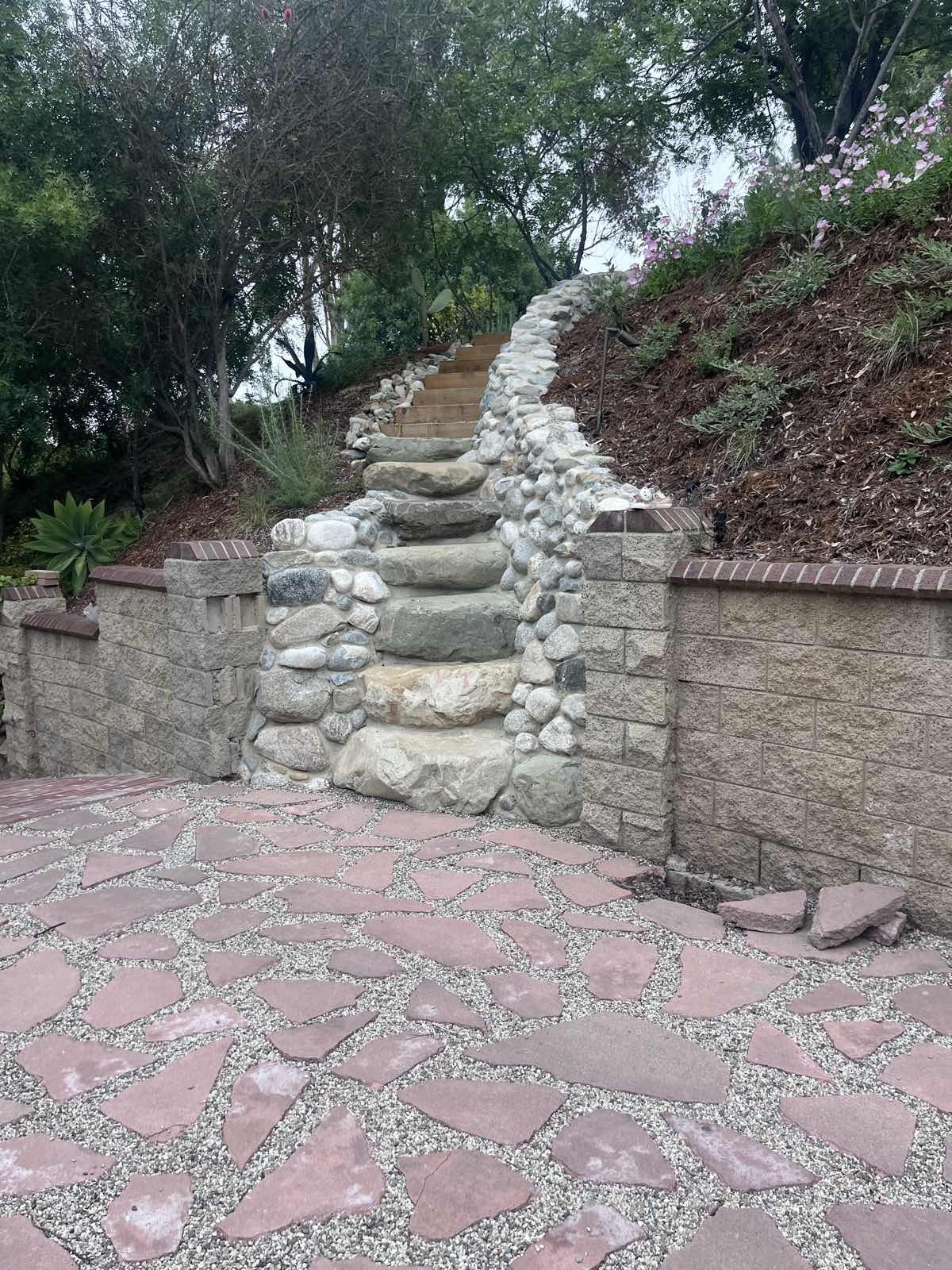
Solid stone treads set into a slope, or built-up steps with a stone face and a solid core. Cut to a consistent rise so they are comfortable to walk, and set so they never rock underfoot.
Boulders
Placed as landscape features, slope retention, seating or grade transitions. Selection and orientation matter more than size. A boulder set at the wrong angle looks dropped, and one buried to the right depth looks native.
Cobblestones
Granite and reclaimed cobbles for driveway aprons, borders, gutters and accent bands. Extremely durable under traffic and a straightforward way to break up a large flat expanse.
Stone veneer
Thin natural stone applied over an existing wall, chimney or column. It gives the appearance of full stone masonry at roughly half the cost and adds far less weight, which matters on retrofits.
What Affects the Cost of Stone Masonry
Stone pricing depends as much on the labor to fit it as on the rock itself. The drivers:
- Stone type. Domestic sandstone and fieldstone sit at the accessible end. Imported limestone, cut granite and specialty quarried stone cost considerably more.
- Cut or irregular. Squared and gauged stone lays faster. Irregular fieldstone takes far longer to fit and that time is most of the price.
- Dry-stack or mortared. Mortared work needs a footing and pointing. Dry-stack needs more careful selection and more waste.
- Area and thickness. Full-bed stone weighs enough to need structural support. Veneer does not, and prices accordingly.
- Site access. Stone arrives on pallets and gets moved by hand or machine. A narrow side yard or a hillside changes the labor completely.
- Base preparation. A flagstone patio over an existing slab is quick. One that needs excavation, base rock and compaction is not.
We quote a flat price after the site walk, including base preparation and cleanup. Estimates are free: (310) 651-7257.
Frequently Asked Questions
What is the difference between natural stone and stone veneer?
One is structural, one is a finish. Full-bed stone is cut three to six inches thick, weighs accordingly, and needs a footing or a supporting ledge. Veneer is one to two inches, bonded to a prepared wall, and carries no load, which is why it can be applied to existing block or framed construction. Veneer is roughly half the installed cost. Up close, the giveaway is how corners and window returns are detailed.
What type of stone is best for exterior walls?
Granite and quartzite handle exposure best, with the harder limestones close behind. Sandstone is warmer to look at and easier to work, and it erodes faster, which shows sooner on a wall facing the ocean than on one in a sheltered courtyard. Salt air in the South Bay is the deciding factor on anything within sight of the water, and we will say so at the sample stage rather than after installation.
Does flagstone get too hot to walk on?
Less than concrete or dark pavers. Lighter sandstone and quartzite stay comfortable barefoot through most of a South Bay summer, which is why they turn up around so many pool decks here. Darker bluestone holds more heat, so we tend to steer it toward shaded patios.
Can you match the stone on an older Palos Verdes home?
Usually, yes. Palos Verdes stone has a distinctive color and coursing, and there is still material available along with close alternates. We match the coursing and the joint style as well as the rock itself, because getting the pattern wrong shows more than a slight color difference does.
How long does a stone patio or wall take?
A flagstone patio of average size runs 4 to 8 days including base work. A mortared stone wall takes 1 to 3 weeks depending on length and height. Dry-stack work and irregular fieldstone take longer than cut stone because the fitting is the job.
Planning masonry work in Redondo Beach?
Tell us what you have in mind, a wall, a patio, a repair or a full backyard, and we will come out for a free on-site walk and a written price.
Or call us now: (310) 651-7257